

Mount Lemmon, one of the many “sky islands” in southeastern Arizona, rises to over 9,000 feet in the Catalina Mountain Range just north of Tucson. It is a mountain sanctuary for many species: birds that live on the mountain all year long, nest during the summer, or stop by briefly during spring and fall migration.
Birding on Mount Lemmon: A Sky Island Sanctuary
Thanks to its dramatic elevation changes and diverse habitats, Mount Lemmon offers exceptional birdwatching opportunities year-round. From pine forests to riparian corridors, each zone supports different species, making the mountain one of southern Arizona’s premier birding destinations.
Year-Round Birds You Can Spot on Mount Lemmon
Of our year-round residents, one of my favorites is the Acorn Woodpecker, a red, white, and black bird that looks more like a clown than a bird! Acorn Woodpeckers are highly social, nesting in large colonies in dead trees, raising their young cooperatively, and working together to store acorns gathered from riparian oaks along creeks. These stored acorns keep the colony fed through winter.
Acorn Woodpeckers will visit feeders for seeds and nuts and often dominate larger birds such as Steller’s Jays. Listen for the Acorn’s communal “waka-waka-waka” calls as they alert family members when feeders are refilled. Look for their granary trees, where they drill holes in dead wood for storing acorns and carefully rotate them so they fit tightly and remain inaccessible to squirrels and other birds.
Other residents include Wild Turkeys often roaming Summerhaven in flocks of 12 to 18, Common Ravens, Pine Siskins, Mountain Chickadees, and Spotted Towhees. Visitors from outside the region should watch for the Yellow-eyed Junco, common on Mount Lemmon but rare elsewhere.
Stay alert for the Red Crossbill, a nomadic finch that feeds on pinecone seeds and occasionally visits the mountain. Their sharply crossed bills are perfectly adapted for extracting seeds from cones.
Summer Nesting Birds on Mount Lemmon
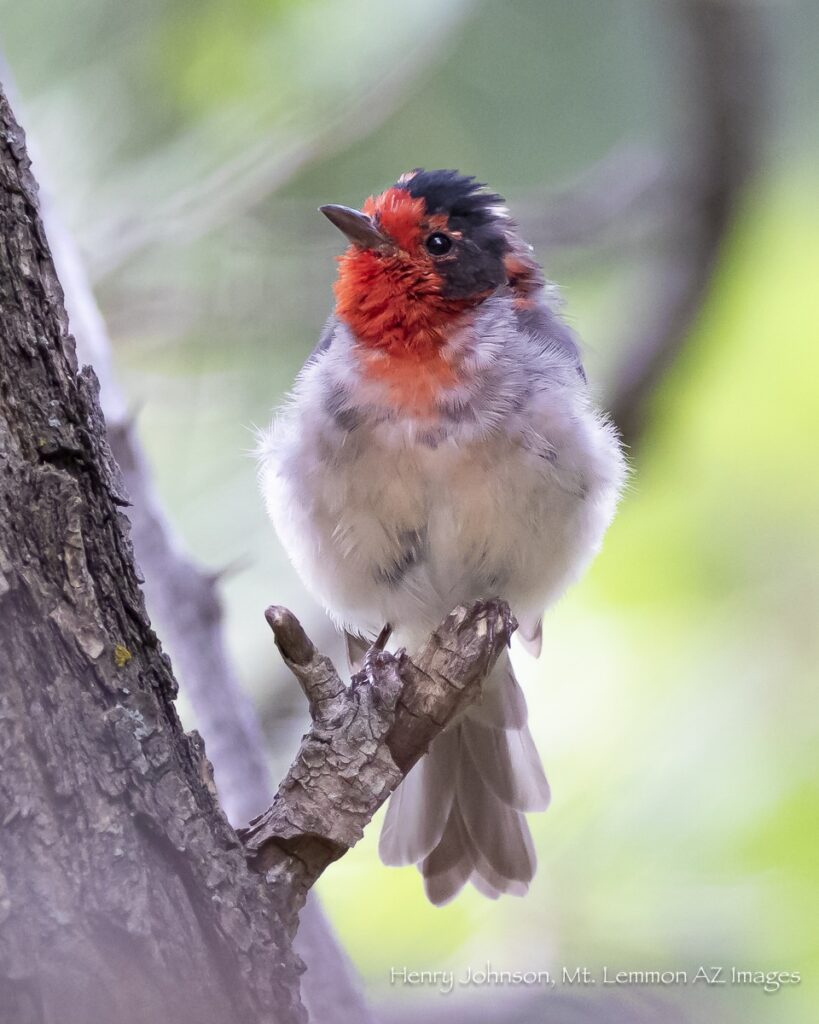
From May through September, nesting activity increases as both year-round and summer residents raise their young. Two of my favorite summer nesters are the Red-faced Warbler and the Painted Redstart, winter residents of Mexico that nest in Arizona’s sky islands, typically near streams. They are regulars along Sabino Creek from Summerhaven into Marshall Gulch and in Rose Canyon.
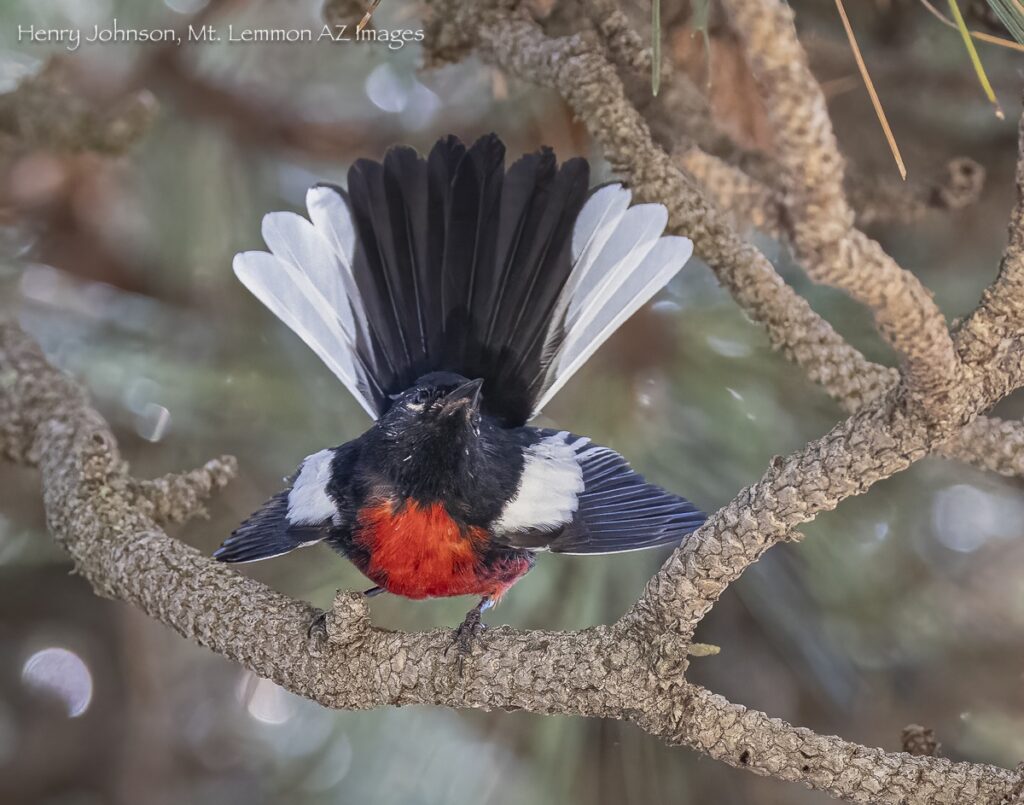
Both species are warblers that feed exclusively on insects, and as summer fades and insect populations decline, they migrate south again.
Another summer nester is the Western Flycatcher formerly known as the Cordilleran Flycatcher. Arriving from Mexico every spring, they build nests on nearly any flat surface, including car tires! Their nests are common throughout the village and Rose Canyon, and pairs often return to the same cabin beams or hose racks year after year.
Nuthatches, Woodpeckers, and Forest Songbirds
Chattering nuthatches are among Mount Lemmon’s smallest and most energetic birds. Look for White-breasted, Pygmy, and the less common Red-breasted Nuthatches as they climb up and down tree trunks in search of insects. Nuthatches nest throughout the mountain’s conifer forests.
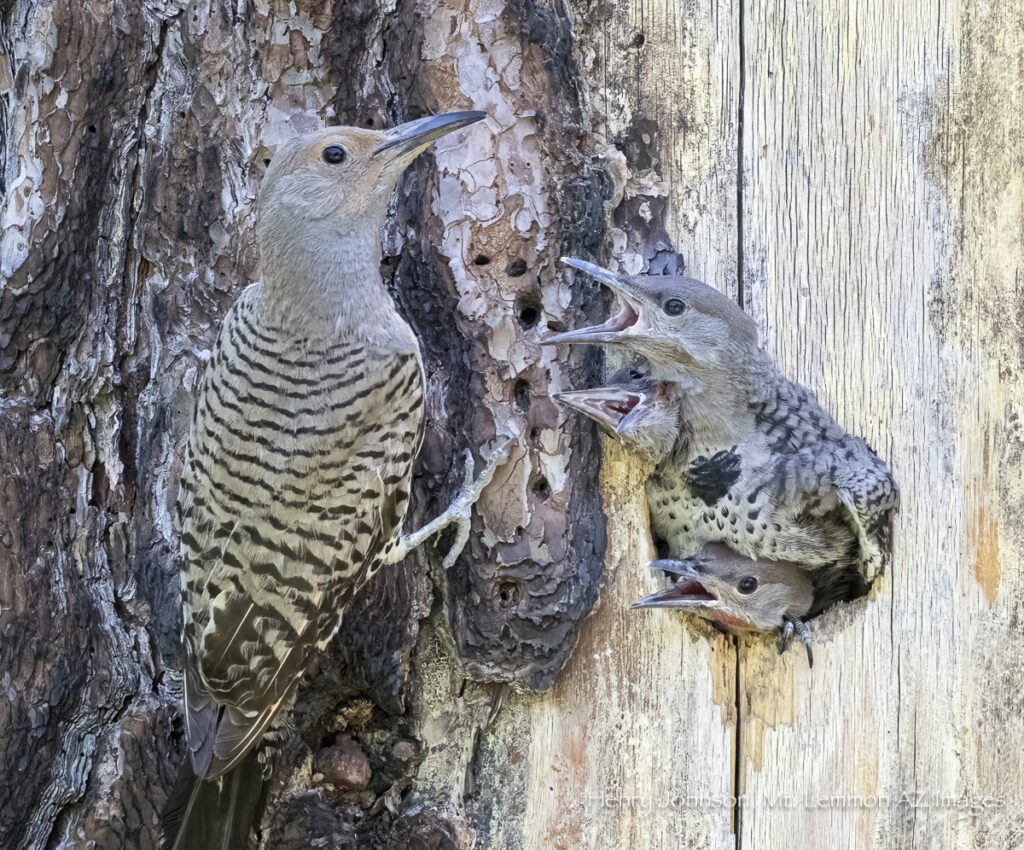
Other nesting species include Hairy Woodpeckers, Northern Flickers, Plumbeous Vireos, American Robins, House Wrens, Violet-green Swallows, and Western Bluebirds.
Hummingbirds and Grosbeaks of Mount Lemmon
Broad-tailed and Rivoli’s Hummingbirds are regulars from spring through fall, while Rufous Hummingbirds pass through during migration. Anna’s and Broad-billed Hummingbirds, common summer residents in Tucson, occasionally visit Summerhaven feeders and can be spotted in Molino Basin and General Hitchcock Campgrounds.
Black-headed Grosbeaks breed on Mt. Lemmon and frequently visit backyard feeders, favoring sunflower seeds cracked open with their powerful bills.
Hermit Thrushes are year-round Arizona residents, wintering below 6,000 feet and nesting above 5,500 feet, including on Mount Lemmon. Listen for their beautiful song, beginning with a sustained flute-like whistle followed by a cluster of harmonics and ending with lower echo-like tones.
Raptors and Scavengers Over Mount Lemmon
Summer on Mt. Lemmon wouldn’t be complete without watching raptors and scavengers. Red-tailed Hawks winter in Mexico but return to the U.S. each March, soaring over the mountain in search of prey, especially near Meadow Trail by the observatories.
And we thank the clean-up crew of Turkey Vultures , circling the mountain and keeping it clean of dead stuff with no grumbling and no fee. ! And, if you are lucky, you might spot an American Goshawk emerging briefly from the deep forest just long enough to be seen, or see a Zone-tailed Hawk kettling with Turkey Vultures.
Fall Migration: Visiting Birds on Mount Lemmon
Come fall, summer nesters head south while northern migrants stop to refuel. Watch for Red-naped Sapsuckers and Lewis’s Woodpeckers, along with Townsend’s, Hermit, Grace’s, Nashville, Wilson’s, and Black-throated Gray Warblers moving through on their southbound journeys.
When Is the Best Time for Birdwatching on Mount Lemmon?
Every season offers something special—spring and fall bring migration, summer showcases nesting activity, and winter reveals hardy mountain residents. No matter when you visit, Mount Lemmon delivers memorable birding experiences.
No matter the season, birds abound on Mount Lemmon. Put on your boots, grab your binoculars, get outside and join them!
To learn more about Birding Mount Lemmon, check out Henry’s website at: http://MtLemmonAZimages.com. If you’re planning a birding getaway, be sure to check out Mount Lemmon Lodge and wake up surrounded by Arizona’s sky island wildlife.